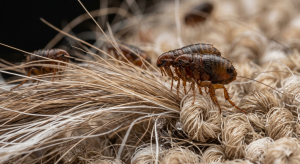
1. Flea Eggs Are Often Left Behind
One of the most common reasons fleas return after treatment is that eggs are not fully eliminated. Adult fleas make up only a small portion of the infestation, while eggs are scattered throughout carpets, upholstery, bedding, and floor cracks.
These eggs can remain dormant for days or weeks before hatching, creating the illusion that the infestation has returned. Even after successful treatment, a new wave of fleas may emerge if eggs were not fully addressed during the initial process.
2. Pupae Can Survive Standard Treatments
Flea pupae are one of the most resistant stages of the flea life cycle. They are protected by a cocoon-like casing that shields them from insecticides and environmental conditions.
Because of this protective stage, fleas may continue to emerge even after professional treatment. Pupae can remain dormant for extended periods and only hatch when they detect movement, heat, or vibrations—such as people walking across carpets.
3. Pets May Still Be Carrying Fleas
Even after home treatment, pets are often the primary source of reinfestation. Cats and dogs can carry flea eggs, larvae, or adult fleas on their fur, especially if they have not received consistent veterinary flea treatment.
Without ongoing pet treatment, fleas can continuously re-enter the home environment, restarting the infestation cycle. Effective flea control always requires simultaneous treatment of both the home and pets.
4. Incomplete Home Treatment
Many over-the-counter flea treatments only target visible adult fleas and fail to reach hidden infestation areas. Fleas commonly survive in:
- Deep carpet fibres
- Upholstered furniture
- Skirting board gaps
- Pet bedding and soft furnishings
- Under furniture and heavy appliances
If these areas are not thoroughly treated, fleas will continue to develop and spread throughout the property.
5. Flea Eggs Hatching in Stages
Flea eggs do not hatch all at once. Instead, they hatch in waves over time, which means infestations can appear to “come back” even after successful treatment.
This staggered lifecycle often leads homeowners to believe treatment has failed, when in reality new fleas are simply emerging from previously laid eggs.
6. Outdoor Reinfection Sources
Fleas can also enter homes from outside environments. Gardens, communal hallways, and public green spaces can all harbour flea populations, especially where stray animals or wildlife are present.
Common outdoor sources include:
- Stray cats and dogs
- Foxes and urban wildlife
- Communal garden areas
- Shared stairwells and hallways in apartment buildings
Without addressing external sources, reinfestation can continue even after indoor treatment.
7. Incorrect or Poorly Timed Treatment
Timing plays a critical role in flea control. If treatments are not repeated or applied at the correct intervals, emerging fleas from eggs and pupae may survive and restart the infestation cycle.
Professional pest control often requires follow-up treatments to ensure all life stages are fully eradicated.
8. Flea Resistance to Weak Treatments
In some cases, fleas may develop resistance to weaker or improperly used insecticides. This can make DIY treatments less effective over time, allowing infestations to persist despite repeated attempts to eliminate them.
Professional-grade treatments are designed to overcome resistance and target multiple life stages simultaneously.
9. Hidden Breeding Hotspots Are Missed
Fleas often concentrate in hidden or overlooked areas that are not treated during standard cleaning or DIY applications. These hotspots may include:
- Under floorboards
- Inside cracks and crevices
- Behind skirting boards
- Inside sofas and cushions
- Pet resting areas
If even one breeding site is missed, the infestation can quickly rebuild.
10. Why Fleas Keep Coming Back in London Homes
In densely populated urban environments such as London, fleas spread easily between properties through pets, shared outdoor spaces, and communal buildings. High pet density and frequent animal movement increase reinfestation risks.
This makes complete environmental treatment and prevention essential for long-term control.
How to Finally Get Rid of Fleas for Good
To fully eliminate fleas, treatment must target every stage of the lifecycle:
- Adult fleas
- Eggs
- Larvae
- Pupae
Effective long-term control includes:
- Professional-grade insecticidal treatment
- Thorough vacuuming and heat washing of fabrics
- Pet flea treatment from a vet
- Follow-up treatments to break the lifecycle
- Ongoing prevention measures
Without a complete approach, fleas will continue to reappear.
Final Thoughts
Fleas persist after treatment because of their complex lifecycle, hidden breeding sites, and external reinfestation sources. What appears to be a failed treatment is often just the delayed emergence of previously laid eggs or surviving pupae.
A fully integrated approach combining professional pest control, pet treatment, and environmental management is the only reliable way to permanently eliminate fleas from your home.